



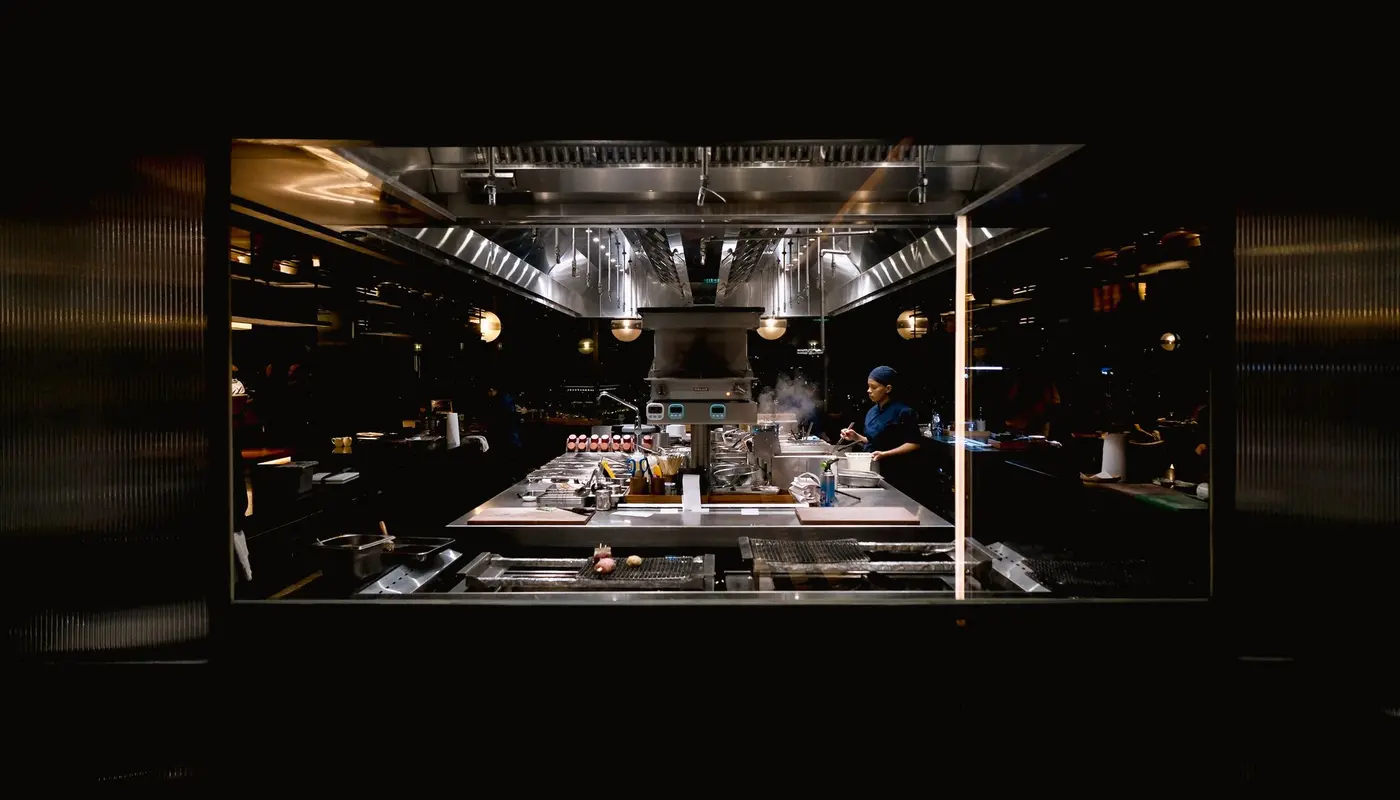
Experiential formats put the kitchen on display and often include live stations. Equipment must support both performance and guest experience.
Considerations
- Visually acceptable equipment finishes.
- Low-noise or well-managed equipment where possible.
- Live-station tools (tandoors, griddles, induction, specialized displays) that are safe near guests.
- Excellent ventilation and odor control.
- Reliable, easy-to-maintain machines because downtime is highly visible.
- Supporting back-of-house capacity so the open area does not become congested.
Balance theatrical elements with practical ticket flow. Staff need training for both culinary execution and guest engagement. Hygiene standards must be impeccable.
Photo by Ayyeee Ayyeee on Pexels.
Frequently Asked Questions
Does experiential dining require completely different equipment?
Not entirely, but selection criteria shift toward aesthetics, safety in proximity to guests, and reliability.
What is essential for success?
Strong ventilation and equipment that performs consistently under observation.
Are costs higher?
Typically yes for ventilation, finishes, and sometimes specialized live-station items.
More from Hospiverse India
🍳
Kitchen EquipmentCommercial Kitchen Equipment for Breakfast & All-Day Dining
Read →🍳
Kitchen EquipmentCommercial Kitchen Equipment for Fine Dining Restaurants
Read →🍳
Kitchen EquipmentCommercial Kitchen Equipment for Pop-Up & Temporary Kitchens
Read →🍳
Kitchen Equipment