



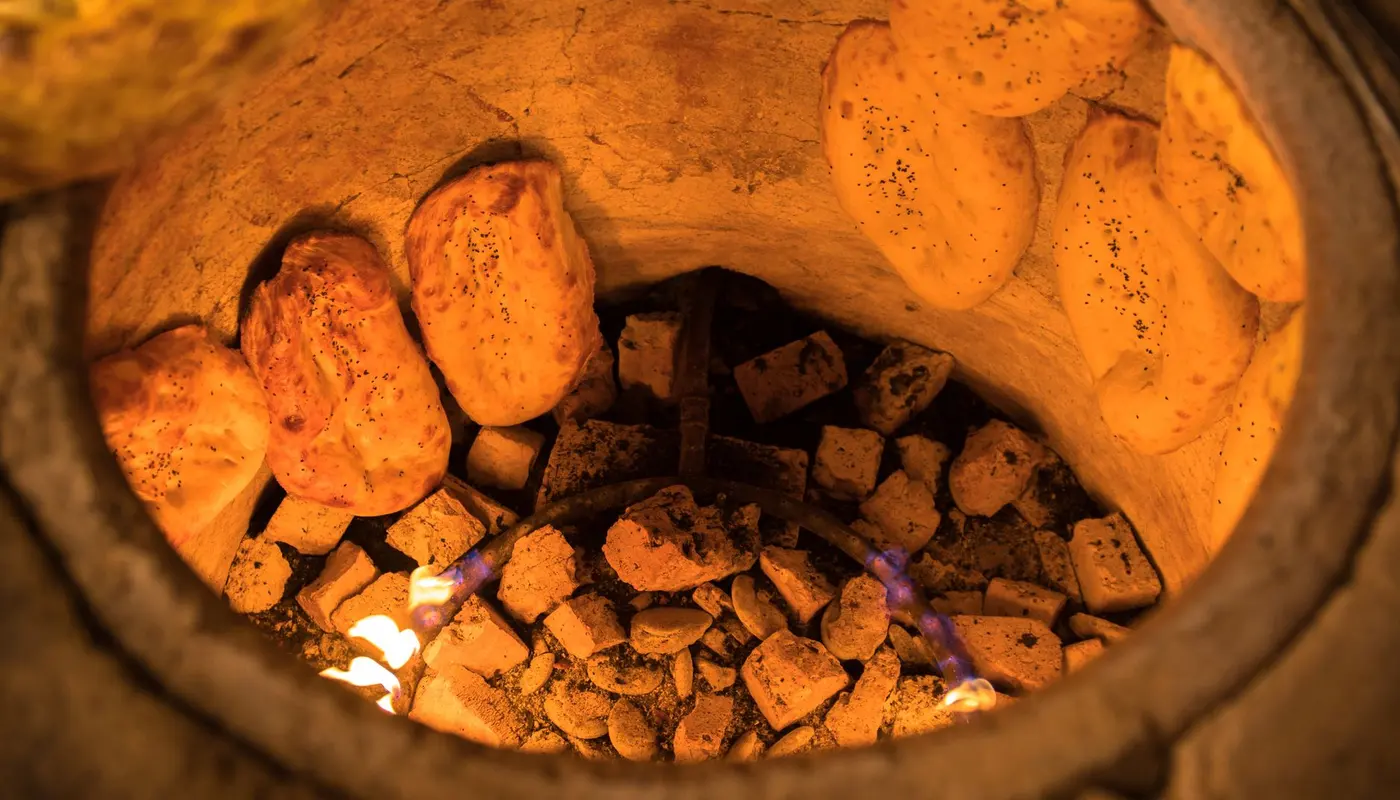
The tandoor is central to most North Indian and many multi-cuisine restaurants. The choice between gas and traditional clay/charcoal models affects flavor, operational ease, safety, and daily consistency.
Gas Tandoors
- Faster and more controllable heat-up.
- Safer and cleaner in enclosed commercial kitchens.
- Easier to maintain consistent temperature during long service.
- Preferred by the majority of hotels and busy restaurants.
- Higher initial cost but lower daily operational hassle.
Most commercial gas tandoors use a clay lining to retain some traditional character while delivering practical performance.
Clay / Charcoal Tandoors
- Traditional flavor that some specialty restaurants still prefer.
- More variable heat and higher maintenance.
- Greater fire and smoke management requirements.
- Better suited to open kitchens or places where the traditional process is part of the experience.
Selection and Installation Tips
Choose size based on peak naan/roti and tandoori volume. Ensure the exhaust system is designed for the tandoor. Proper installation and regular burner cleaning (for gas models) are essential. Factor in floor space, heat output, and staff safety.
Photo by Tahir Xəlfəquliyev on Pexels.
Frequently Asked Questions
Which type do most commercial kitchens choose?
Gas tandoors, primarily for control, speed, and safety.
Does a gas tandoor taste the same?
With a good clay lining and proper technique, the difference is minimal for most guests while operations improve significantly.
What maintenance is required?
Regular cleaning of the chamber and burner checks for gas models; more frequent attention for charcoal.